
“Forgiveness is not forgetting. It is a conscious decision to take responsibility for how a nation moves forward. It is not soft. It is strategic.”
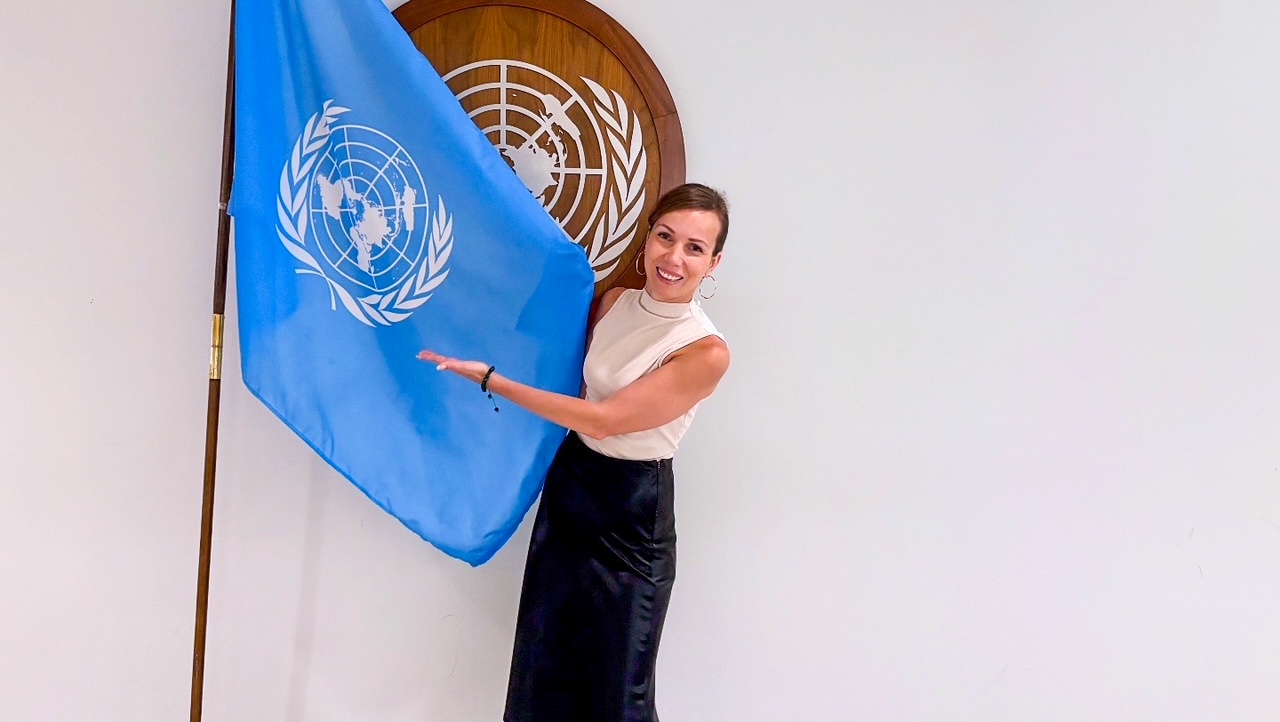
Victoria Martino emphasized that forgiveness is often misunderstood as emotional or passive. In reality, when rooted in accountability and truth, forgiveness becomes a powerful component of international dialogue and long-term reconciliation.
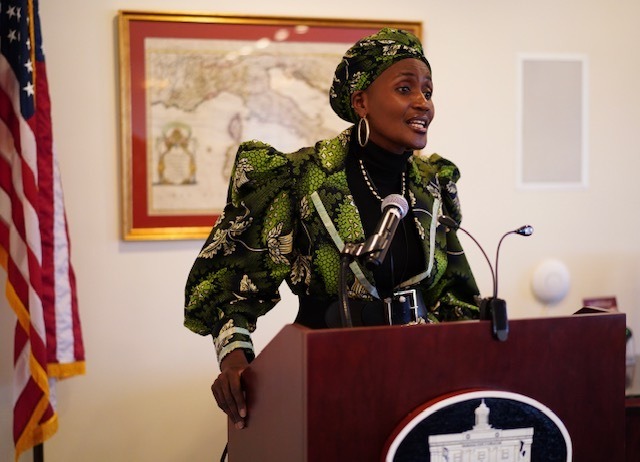
The dialogue continued with a deeply moving testimony from Evelyne Mukasonga, a survivor of the 1994 Genocide against the Tutsi in Rwanda and a renowned author. Evelyne spoke about the loss of her parents and siblings, the personal trauma she endured, and the journey she took toward healing. Her story reflected the deep human cost of violence, and the difficult but necessary path of forgiveness in the face of national tragedy.

“Forgiveness is the only way to release the past from its consequences and allow for a new beginning.”
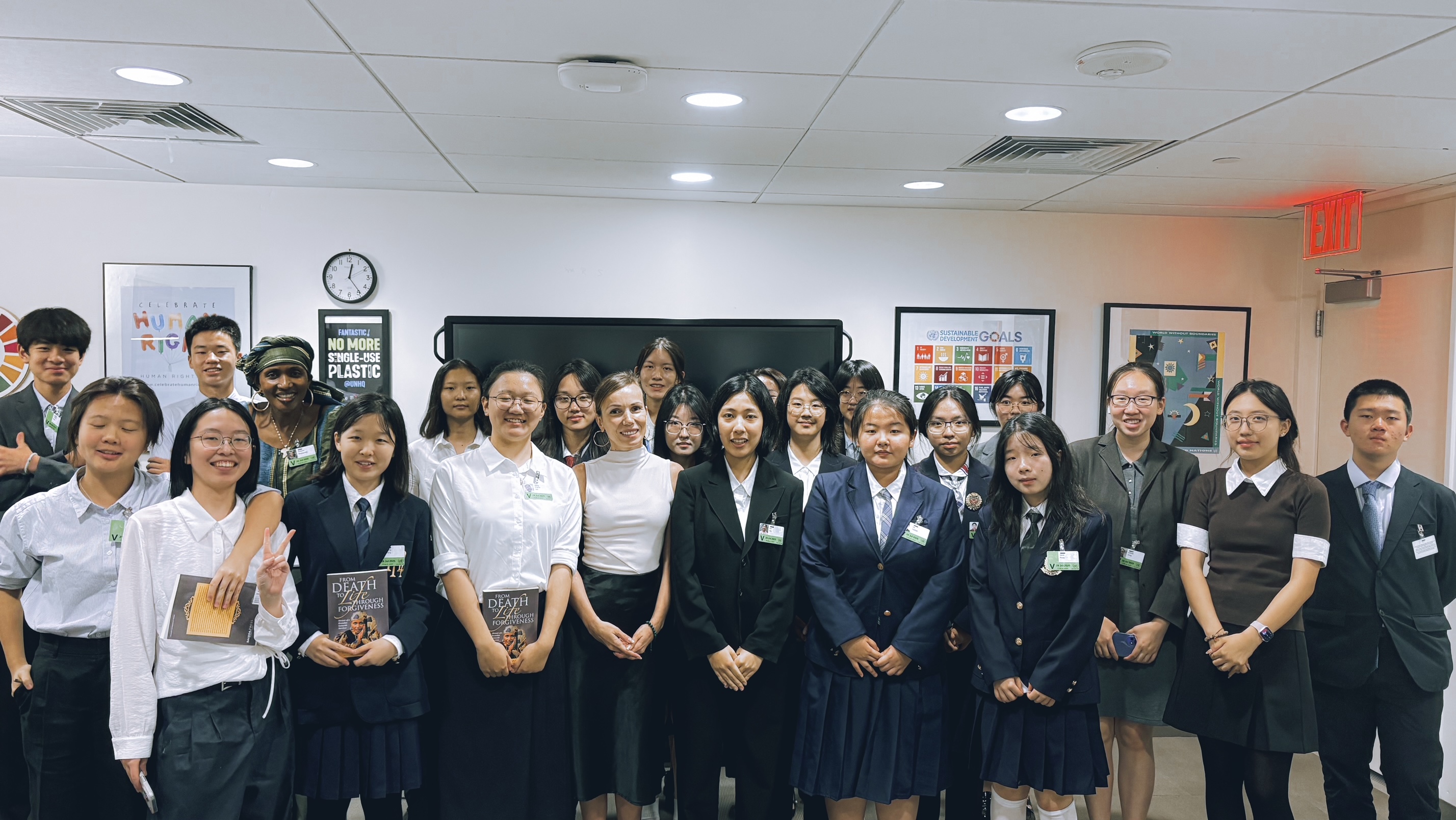
The students from Beijing, participating through the UNITAR Student Lab, asked meaningful and engaged questions. As future diplomats and political leaders, they explored how forgiveness can be applied in international affairs, particularly in post-conflict and transitional contexts.
The session demonstrated that forgiveness is not a retreat from justice. It is not forgetting or excusing harm. It is a forward-looking choice to rebuild, to transform pain into understanding, and to restore dignity where it was denied.
This conversation reminded all participants that peacebuilding requires not only policies, but also the courage to act with humanity.